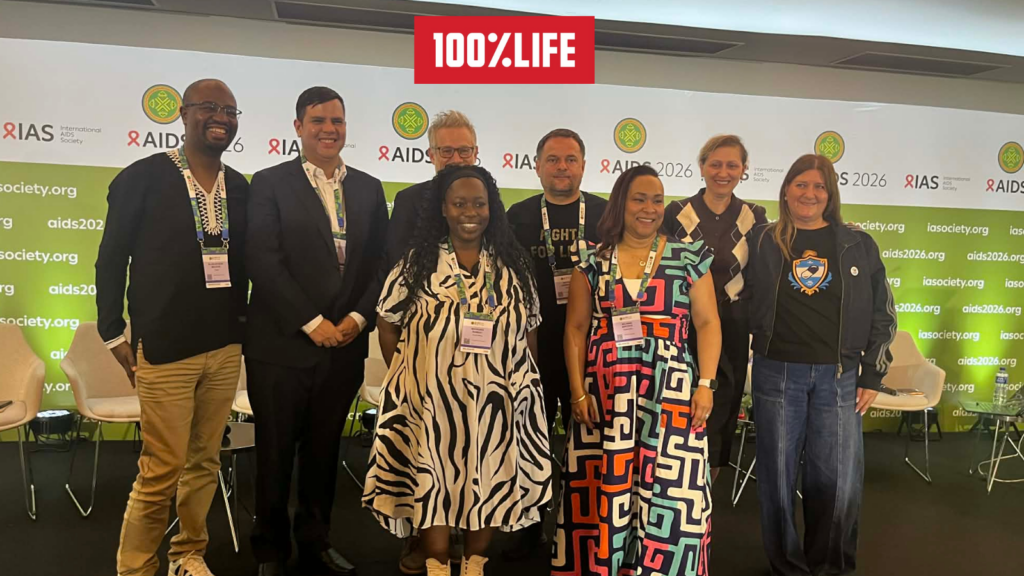
But AIDS 2026 very clearly raised another question: who will get access to these innovations?
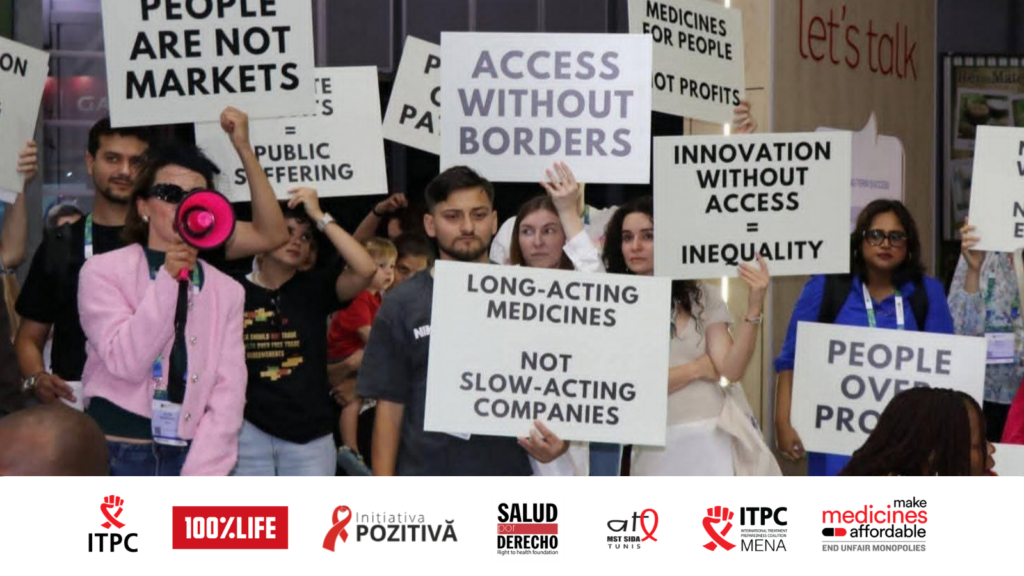
Because if breakthroughs exist only in scientific publications, clinical trials or for countries that can pay the highest price, they do not change the lives of people where the need is greatest.
For 100% LIFE, this topic is not new. Access to treatment has always been a political, legal and community issue. It is a fight against pharmaceutical monopolies, patent barriers, inflated prices, unequal access and the lack of generic competition.
That is why communities must not only be recipients of treatment. They must be participants in negotiations, advocacy, patent processes and policy-making.
At AIDS 2026, we were once again convinced: the future of the HIV response is not only about new medicines. It is about ensuring that these medicines are accessible to people.
Science must save lives. And access must be part of innovation from day one.
For reference: IAS reports that 95% of participants in PURPOSE 1 and PURPOSE 2 chose to continue lenacapavir, and also highlights once-weekly oral islatravir/lenacapavir as potentially the first complete once-weekly oral HIV treatment. The material also cites the position of Brazil’s Minister of Health: “Innovation without access is not an innovation. It is an injustice.”
About Ukrainian models — in our From Experience to Action collection.
The document is produced by CO 100% Life with the support of the Askold and Dir Fund as a part of the Strong Civil Society of Ukraine — a Driver towards Reforms and Democracy project, implemented by ISAR Ednannia, funded by Norway and Sweden. The contents of this publication are the sole responsibility of CO 100% Life and can in no way be taken to reflect the views the Government of Norway, the Government of Sweden and ISAR Ednannia.





 info@network.org.ua
  +38 (044) 339-93-50
  87A, Mezhyhirska St., Kyiv