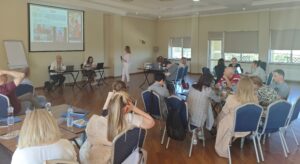
On 18–19 June 2026, a working meeting was held in Lviv for the ‘Mobile Sexual and Reproductive Health Teams’ project, which is being implemented as part of the humanitarian response by UNFPA, the United Nations Population Fund in Ukraine, with financial support from the European Union, in collaboration with the charitable organisation ‘100% Life’.
The meeting was attended by representatives of UNFPA, the United Nations Population Fund in Ukraine, the charitable organisation ‘100% Life’, regional coordinators, obstetricians and gynaecologists, nurses and other specialists from the mobile teams across various regions of Ukraine.
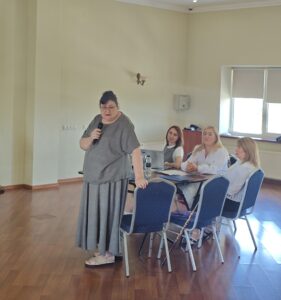
Mobile sexual and reproductive health teams operate in communities where access to healthcare is often hampered by the war, the remoteness of settlements, security risks, staff shortages or complex logistics. This is precisely why regular feedback from the teams working on the ground every day is a vital part of the project’s development.
Such working meetings allow us not only to take stock of progress but also to listen to the teams’ needs, discuss challenges in the regions, identify areas for improvement, and jointly develop solutions that help the teams work more consistently, safely and effectively.
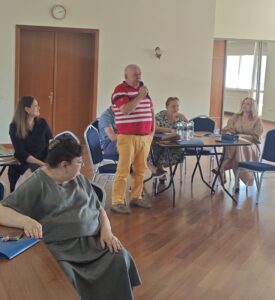
During the meeting, the key results of the project’s implementation in 2026 were presented. As of the first half of the year, 13 mobile teams are working on the project. During this period, 756 outreach visits were carried out, nearly 15,000 patients were examined, and over 24,000 consultations were provided.
The teams also outlined the regional context of their work. They discussed their activities in remote communities, frontline regions, and settlements characterised by difficult access routes, security restrictions and limited public access to specialist medical care.
In many communities, a visit from a mobile team offers women the opportunity to undergo a check-up, receive advice, identify health risks in good time and obtain recommendations for further treatment or additional tests.
“It is important to us that decisions within the project are based on the teams’ real-world experience. It is the specialists in the mobile teams who are best placed to see the barriers patients face in their communities and what needs to be changed to make care safer and of a higher quality,” said Olena Gazizova, project manager at the charitable organisation “100% Life”.
Participants also discussed testing the updated data collection questionnaire. Feedback from the teams should help make the tool more user-friendly and accurate for recording the services provided and patients’ needs.
The meeting focused on implementing measures to raise community awareness and train staff on preventing sexual exploitation and abuse. The services provided by the mobile teams are free of charge, safe and confidential, and are delivered in accordance with the principles of protection against sexual exploitation and abuse.



 info@network.org.ua
  +38 (044) 339-93-50
  87A, Mezhyhirska St., Kyiv