From October 11 to 13, 2026, the World Health Summit 2026 took place in Berlin and online—an international forum that brings together representatives from governments, international organizations, academia, civil society, and the private sector to address key global health issues.
Steffen Kugler http://steffenkugler.de
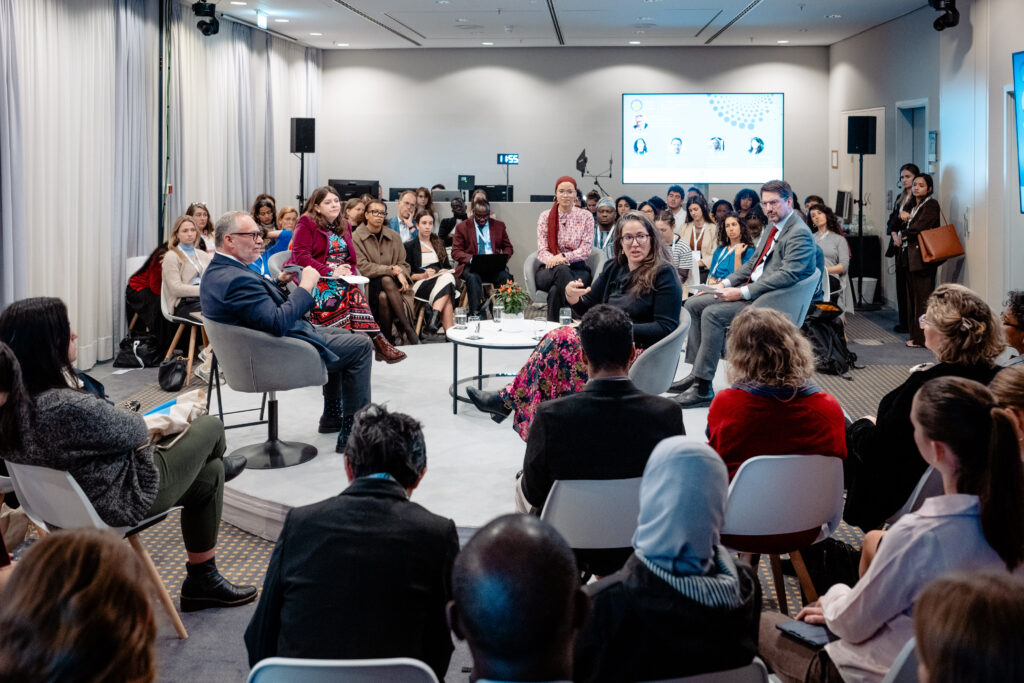
One of the summit’s highlights was the panel “Strengthening Health Systems for Migrant Women, Children, and Youth Across the Migration Continuum”, which focused on how to make health care systems more accessible to women, children, and young people at various stages of migration. The session, held on October 13 and co-organized by the World Health Organization (WHO), was moderated by Santino Severoni, WHO’s Head of Health and Migration.
The discussion featured:
The discussion began with a statistic that illustrates the scale of the problem: today, approximately one billion people worldwide are migrants, refugees, or internally displaced persons. Among them are 49 million children displaced by war, violence, and disasters. But behind these statistics lie very different stories, needs, and routes. That is precisely why, as the panelists emphasized, there can be no single, universal solution here.
One of the main conclusions of the discussion is that a person’s health during migration depends not only on the availability of a hospital or health insurance. It is influenced by the reasons for leaving, experiences encountered along the way, living conditions upon arrival, legal status, employment, education, language proficiency, and the attitude of the host society.
A person who has fled a war may need psychological support or treatment for the effects of violence. A person who left their home due to a drought or other climate-related disaster may face problems related to malnutrition. Once in the destination country, these challenges are compounded by overcrowded housing, unstable employment, physically demanding work, discrimination, and the difficulty of navigating a new system.
Therefore, the issue of migrants’ health cannot remain the sole responsibility of health ministries. It requires the involvement of social, educational, housing, labor, and immigration services, as well as civil society organizations and the migrant communities themselves.
A telling example mentioned by Natalia Linou concerned the continuity of tuberculosis treatment among people moving between Afghanistan, Iran, and Pakistan. If the systems of neighboring countries do not share information and do not have coordinated pathways for assistance, a person may interrupt their treatment simply because they crossed a border.
During a war or other emergency, the primary task is to save lives and provide basic assistance. But temporary humanitarian services cannot exist indefinitely alongside the state system.
Summarizing the discussion, Gabriele Fontana put it particularly clearly: parallel services may be a necessary bridge during a crisis, but the ultimate goal must remain the integration of people into the national health care system.
This means that people must have access to more than just emergency care. They need a family doctor, vaccinations, treatment for chronic conditions, psychological support, specialized care, and a clear pathway between different healthcare facilities.
To ensure that temporary programs do not disappear once the grant ends, integration must be planned from the very beginning: training local professionals, harmonizing standards, establishing referral mechanisms, and securing funding beyond the humanitarian phase.
During the panel discussion, two stories were shared that clearly illustrate just how different a child’s experience of migration can be.
The first was about a 17-year-old boy from South Sudan who traveled across much of Africa on his own and spent nearly half a year in a reception center in Italy, even though he was supposed to stay there for only a few weeks.
The second story was about a six-year-old girl from Ukraine who, along with her mother, traveled through Poland to Spain after the outbreak of full-scale war. At every stage, the family faced new requirements: registering with the healthcare system, providing proof of vaccination, finding Ukrainian-speaking specialists, and accessing psychological support.
These cases cannot be treated the same way. The needs of a child traveling with a family differ from those of an unaccompanied teenager. Age, family situation, traumatic experiences, health status, and the duration of the journey or stay at a reception center all play a role.
It is also important that responsibility not fall solely on doctors. A teacher, social worker, shelter staff member, or representative of a civil society organization may be the first to notice a need for assistance. To this end, there must be clear connections and referral mechanisms between different sectors.
Even if the law allows a person to receive medical services, in practice they may not know where to turn, may not understand medical terminology, or may be unable to make an appointment by phone in the language of the host country.
These barriers are particularly acute in the areas of mental, sexual, and reproductive health. It is difficult for a young person to discuss sensitive issues even in their native language. The likelihood of seeking help decreases even further if the system uses unclear language and does not guarantee confidentiality.
Among practical solutions, participants mentioned professional medical translation, plain language, visual instructions, multilingual digital services, and the involvement of consultants from the migrant communities themselves.
One participant in the discussion spoke about an organization in the U.S. that uses a model of community health workers. They help migrants make doctor’s appointments, communicate with healthcare facilities, understand medical recommendations, and navigate the entire treatment process. Such support is often crucial for someone who is not yet familiar with the language and rules of their new country.
Another major barrier remains the fear of detention or deportation. People with irregular status may avoid seeking help for fear that a medical facility will share their information with immigration authorities.
Panel participants emphasized the need for so-called firewalls—clear legal and informational barriers between the healthcare system and immigration control services. Medical information should not be used to persecute a person because of their status.
Without such a guarantee, even high-quality and free services will remain inaccessible. People will seek care later, when their condition has already worsened and treatment has become more complicated and expensive.
Roberta Bojang presented the results of consultations with over 800 young migrants. Among the main problems they cited were legal and administrative obstacles, language barriers, stigma, and the difficulty of accessing mental, sexual, and reproductive health care.
However, the issue of youth participation has become equally important. Often, young people are invited to a single consultation, their suggestions are collected, and then they are no longer informed about subsequent decisions. They do not know whether their recommendations were used or why certain ideas could not be implemented.
According to Roberta Bojang, young people need to be involved in the entire cycle: from identifying the problem and developing the program to implementation, resource allocation, and evaluation of results. At the same time, participation becomes truly meaningful only when young people are given not just the opportunity to express themselves, but real influence over decisions and budgets.
This approach is not only fairer but also more practical. If a service for young people is tested together with its future users before launch, it’s possible to spot unclear language, complicated navigation, or a mismatch with real needs in time. This helps avoid spending money on programs that no one will use.
Daniela Rodriguez suggested viewing migration as a systemic problem that unfolds over time, crosses borders, and involves a constant transfer of responsibility between institutions.
Therefore, it is not enough to simply research the needs of migrants. We need to identify exactly where the system breaks down. This could be a legal restriction, a lack of funding, a lack of translation, the non-recognition of medical documents, or a lack of coordination between humanitarian and government services.
A separate issue is who sets the agenda for such research. A significant portion of international funding goes to institutions in the Global North, even when the research itself is conducted in Africa, Asia, or Latin America. Local universities and civil society organizations often remain mere implementers or data providers, rather than full-fledged leaders of the work.
A fair partnership requires that local institutions participate in defining research questions, control a portion of the budget, analyze the results, and present them at the international level.
Without reliable data, it is difficult for governments to plan services and funding. If official statistics do not reflect the actual number of people living in a community, healthcare facilities will not receive sufficient staff and resources.
But collecting detailed information has another side to it. Data on migration status, location, or membership in a particular group can be used to persecute people.
That is why information systems must have clear rules: why the data is being collected, who has access to it, how long it is stored, and whether every category of information is truly necessary. The desire to plan services better should not expose people to additional risk.
Certain high-quality services created exclusively for refugees can cause tension if local residents have been denied access to the same assistance for years. This is particularly acute in regions where the healthcare system was already overburdened before the arrival of new residents.
Therefore, programs should, as much as possible, strengthen the system for everyone: expand primary care, train healthcare workers, and improve translation services, vaccinations, mental health services, and referral mechanisms.
This approach also shifts the very conversation about migration. Instead of pitting “locals” against “newcomers,” it creates an opportunity to develop services that benefit the entire community.
Panelists cited examples where vaccination programs or public health care initiatives for displaced people simultaneously increased access to services among the local population. This shows that investments in migrants’ health are not necessarily an additional burden. With proper planning, they can strengthen the entire system.
Digital medical records, translation apps, telemedicine, and online support can be particularly useful for people who frequently change their location. A cell phone is sometimes the only tool a person has to store documents, access information, and stay connected.
However, technology will not solve the problem if a person lacks access to the internet, a phone, or electricity. Nor will it remove legal restrictions or replace trust in healthcare providers.
Technological solutions must be developed in collaboration with future users, tested for accessibility, and always accompanied by robust personal data protection.
The discussion showed that the necessary solutions are already known. These include access to basic healthcare regardless of status, language support, continuity of care, data protection, youth participation, sustainable funding mechanisms, and the involvement of civil society organizations in policy development.
The challenge lies in moving from isolated pilot projects to everyday practice.
A healthcare system capable of supporting people during their journey, after crossing the border, and throughout the integration process will be stronger—not just for migrants. It will become more accessible to everyone who, due to poverty, language, disability, place of residence, or other circumstances, remains overlooked.
And perhaps this was the panel’s main message: assistance for people in the process of migration should not be a temporary exception. It must become part of the normal operations of a modern healthcare system.




 info@network.org.ua
  +38 (044) 339-93-50
  87A, Mezhyhirska St., Kyiv