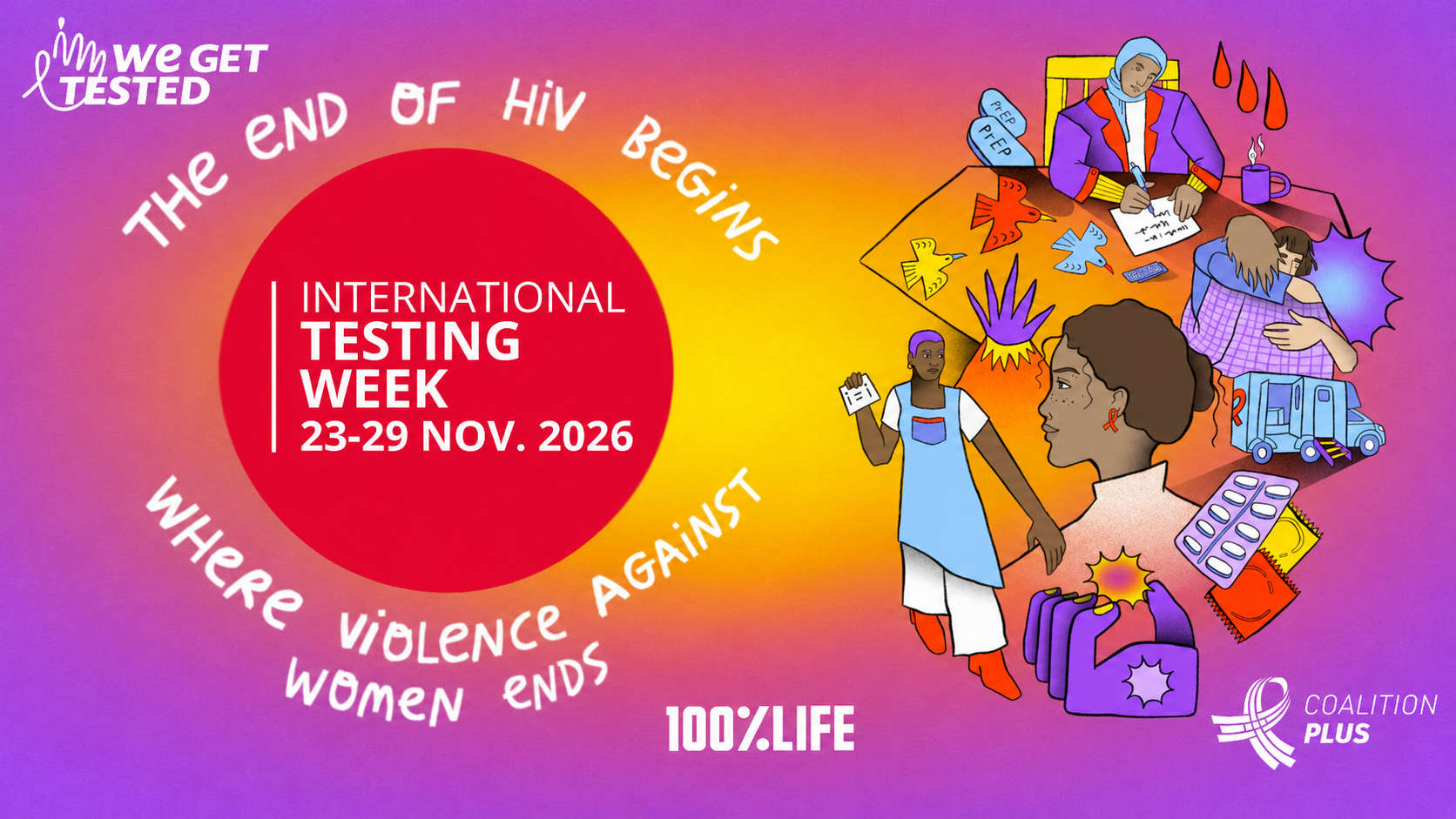
From 23 to 29 November 2026, the seventh International Testing Week (ITW), coordinated by Coalition PLUS, will bring together around 100 organisations in 70 countries. Linked to the 16 Days of Activism against Gender-Based Violence campaign, the initiative will highlight forms of violence that prevent women from accessing prevention, testing and healthcare. Coalition PLUS calls for the prevention and identification of such violence, along with support for survivors, to be integrated into the HIV response.
In Ukraine, the charitable organisation 100% LIFE is a partner of International Testing Week and calls for accessible testing to be combined with confidential support for people who have experienced violence.
100% LIFE: bringing testing closer to people
The charitable organisation 100% LIFE joined Coalition PLUS in 2020 and became an implementing partner for International Testing Week in Ukraine. Together with the community of the “Your Family Doctor” public union, whose members serve as ambassadors for the initiative, it informs Ukrainians about opportunities to access free HIV and hepatitis testing through their family doctor.
Testing should be an accessible part of looking after one’s health, rather than a source of fear or judgement. 100% LIFE encourages people to find out their HIV status and calls on healthcare professionals to inform patients about testing options and help them access the services they need.
Testing and support during the war
According to the Public Health Center of the Ministry of Health of Ukraine, 130,522 people living with HIV were under medical follow-up in Ukraine as of 1 October 2026. Between January and September 2026, 5,320 cases of HIV infection were identified and officially registered.
Russia’s full-scale war against Ukraine has increased the risk of gender-based violence. Forced displacement, economic pressures and loss of safety make women and girls more vulnerable. UNFPA estimates that around 2.91 million people in Ukraine, predominantly women and girls, need services to prevent gender-based violence and support survivors. This figure is an estimate of service needs, rather than the number of recorded cases of violence.
Gender-based violence hinders prevention and testing
Violence — whether sexual, physical, psychological or economic — can put women at risk of acquiring HIV and hinder their access to health services. A partner’s control over their movements or resources, fear of retaliation, or an inability to negotiate condom use limit women’s ability to protect themselves. Fear of violence can also lead women to delay testing, while disclosing an HIV-positive status can trigger or intensify violence.
These barriers are sometimes compounded by the discrimination faced, in particular, by transgender women, sex workers, migrant women and women who use drugs. Ensuring access to healthcare means enabling every woman to seek care safely and make her own decisions.
Testing as an opportunity to access support
International Testing Week 2026 will help strengthen links between community organisations and feminist groups around three priorities: raising awareness of violence and rights, identifying situations of violence, and making referrals to appropriate support services.
In practice, meeting a team from a community organisation can give a woman an opportunity to speak about the violence she has experienced and access medical, psychological, legal or social support. This approach requires trained teams, a confidential setting and established referral partners. Each person’s consent and choices must be respected, without requiring them to share their story or take any particular action.
These activities should be coordinated with prevention services, testing for HIV, viral hepatitis and other sexually transmitted infections, and referrals for healthcare and prevention, including pre-exposure prophylaxis (PrEP), which uses medication to prevent HIV.
“When a woman fears violence if she asks for a condom to be used, gets tested or discloses her HIV-positive status, her access to healthcare is at risk. Our responsibility is to offer services where she is heard and supported, and where she can make free and informed decisions about her health. This requires sustained support for community organisations and stronger links between them and feminist organisations. Protecting women from violence must be a priority in the HIV response,” says Magatte Mbodj, President of Coalition PLUS and Executive Director of ANCS (Senegal).
Support for survivors at 100% LIFE clinics
In Kyiv and Poltava, 100% LIFE clinics combine testing for HIV, viral hepatitis B and C, and syphilis with consultations on sexual and reproductive health. People who have experienced sexual or other gender-based violence can seek medical care at the clinics and, where needed, receive social support.
All requests for assistance and consultations with a professional are confidential, and services under the project are free of charge for patients.
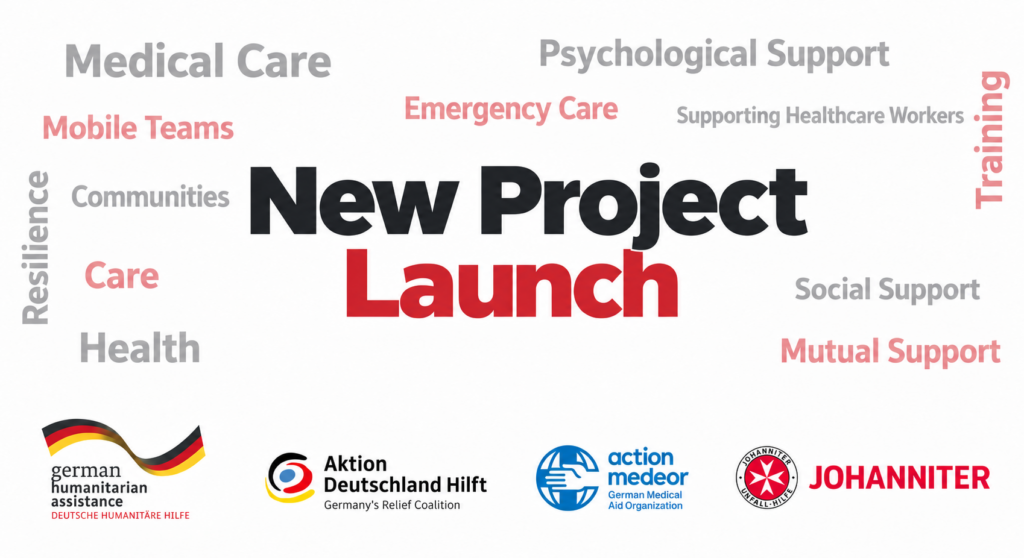
The project is implemented by the charitable organisation 100% LIFE together with Johanniter and action medeor, with financial support from the German Federal Foreign Office (GFFO) and co-funding from Aktion Deutschland Hilft (ADH).
Bringing these services together reflects the central approach of this year’s campaign: testing should provide a pathway to care that respects each person’s needs, safety and choices.
Where to get tested in Ukraine
Free and confidential HIV testing is available from your family doctor, at Dovira (“Trust”) clinics, in mobile clinics and at testing sites run by non-governmental organisations.
The Public Health Center’s “#ТЕСТпоруч” (“Testing Nearby”) service can help you find the nearest testing site. You can assess your own risk of acquiring HIV using the online risk assessment tool at prozdorovia.in.ua.
Rapid tests for viral hepatitis B and C are also available free of charge from family doctors or at other healthcare facilities that provide these services under a contract with the National Health Service of Ukraine (NHSU). You can find the nearest facility on the Public Health Center’s map.
After sexual violence, it is important to seek medical care as soon as possible. A doctor will assess the risk of HIV infection and the need for post-exposure prophylaxis (PEP). If indicated, PEP must be started as early as possible and no later than 72 hours after possible exposure to HIV.
International Testing Week is an opportunity to take a step towards looking after your health. Testing and support are available throughout the year, without having to wait for the campaign to begin.
International mobilisation and launch in Bucharest
Launched by Coalition PLUS in 2020, International Testing Week provides access to prevention and testing for people with the most limited access to healthcare. In 2025, it brought together 70 organisations in 49 countries and enabled 92,193 tests to be carried out.
The 2026 campaign will launch in Bucharest in partnership with ARAS — the Romanian Association Against AIDS, European Testing Week, the World Hepatitis Alliance and Frontline AIDS.
Upholding rights and securing sustainable funding
Coalition PLUS calls on public authorities and funding partners to:
Key figures: women and HIV
About Coalition PLUS
Founded in 2008, Coalition PLUS is a network of more than 115 community organisations working in 54 countries to improve the health and protect the rights of populations vulnerable to HIV and hepatitis.
International Testing Week receives financial support from the French Development Agency (AFD), Expertise France, the Île-de-France region, the City of Paris and Médecins du Monde (Doctors of the World).



 info@network.org.ua
 +38 (044) 339-93-50
 87A, Mezhyhirska St., Kyiv